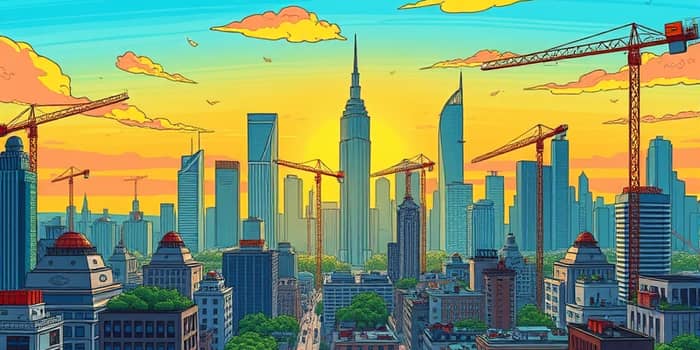
As cities swell with new residents and economic activity, the global landscape is transforming at an unprecedented pace. Investors, policymakers and communities alike stand at a pivotal crossroads, poised to harness the power of urban growth for collective prosperity. This article explores the sweeping forces driving urbanization, the challenges they bring, and the boundless opportunities for strategic investment across the world.
From the gleaming skyscrapers of Tokyo to rapidly expanding towns in Africa, urbanization shapes our shared future. By understanding demographic shifts, infrastructure demands and policy frameworks, stakeholders can create impactful projects that elevate living standards, foster sustainable growth and deliver meaningful returns.
Today, more than 58% of the world’s population resides in cities — roughly 4.8 billion people. By 2050, that figure is expected to rise to 68%, adding approximately 2.5 billion urban dwellers. These shifts are not uniform. While North America and Europe already exceed 74% urbanization, Asia sits at around 50%, and Africa at 43%, yet records the fastest growth rates. Nearly 90% of all future urban growth will occur in Asia and Africa, with India, China and Nigeria alone contributing over 860 million new city residents.
These demographic transitions are reshaping economic, social and environmental landscapes, creating megacities and smaller urban centers that demand innovative solutions and fresh investment approaches.
Urbanization serves as a transformative engine of growth by concentrating labor pools, fostering innovation and driving productivity. Industries flourish in dense environments where talent, capital and infrastructure converge. Access to better education, healthcare and public services draws rural migrants seeking improved livelihoods.
Yet these benefits carry hidden burdens. Rapid city expansion can outpace the construction of housing, roads and utilities, straining local resources. Without careful planning, surging populations can give rise to informal settlements, congestion and environmental degradation.
Savvy investors can channel capital into sectors that address core urban needs while delivering robust returns. With cities generating over 80% of global GDP, opportunities span from foundational infrastructure to cutting-edge digital solutions.
Tokyo, home to nearly 37 million people, illustrates how integrated transport systems and mixed-use developments can sustain megacity dynamics. New urban districts combine office towers, residential units and green spaces around high-speed rail stations, enabling seamless mobility and vibrant street life.
In Lagos, Nigeria’s largest city, investments in bus rapid transit corridors and port expansions have eased congestion and boosted trade. Partnerships between public agencies and private developers are also delivering affordable housing precincts, setting a blueprint for other fast-growing African cities.
Meanwhile, European cities like Copenhagen showcase the benefits of prioritizing cycling infrastructure and renewable energy. Public–private collaborations fund solar districts and district heating networks, proving that sustainability and profitability can advance in tandem.
Successful urban investments depend on aligning with robust policy frameworks and international goals, such as the United Nations’ 2030 Agenda for Sustainable Development. Governments must enact zoning reforms, streamline permitting procedures and introduce incentives for green construction.
Crucially, inclusive growth demands slum upgrading programs, equitable access to services and the preservation of cultural heritage. Strengthening urban–rural linkages through supply chains and value networks also ensures that prosperity extends beyond city limits.
To navigate future uncertainties—climate shocks, demographic transitions and technological disruptions—stakeholders should embrace adaptive planning, scenario analysis and cross-sector collaboration. By doing so, cities can remain resilient, inclusive and economically vibrant.
As we stand on the verge of an urban renaissance, the choices we make today will reverberate for generations. By investing in sustainable infrastructure, smart technologies and inclusive policies, we can create cities that are not only engines of growth but also bastions of equity and environmental stewardship.
For investors, the path forward is clear: target high-growth regions in Asia and Africa, foster partnerships with local governments, and prioritize projects that balance financial returns with social impact. In doing so, capital can unlock transformative change, elevating millions of lives and shaping a vibrant, resilient global urban landscape.
Now is the time to embrace the promise of urbanization and seize the opportunities it presents. The cities of tomorrow await bold visions and decisive action—let your investments pave the way to a brighter, more sustainable world.
References