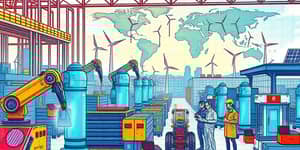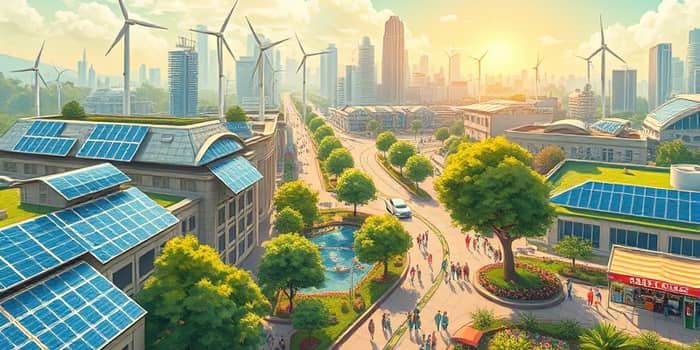
As nations grapple with climate pressures and resource constraints, the green economy emerges as a beacon of hope—an unprecedented opportunity to align prosperity with planetary health. Unlocking this potential demands vision, investment, and collaboration across governments, businesses, and communities.
The green economy encompasses economic activities that promote environmental sustainability. It spans clean energy, green technologies, sustainable construction, circular manufacturing, and nature-based solutions. By efficient use of resources, it seeks to decouple growth from environmental degradation and drive innovation.
In Q1 2025, the global green economy is valued between $7.2 trillion and $7.9 trillion—roughly 8.6%–10% of world GDP. Fueled by policy support and technological advances, projections foresee a rise to 10%–15% of GDP by 2030, with a compound annual growth rate exceeding 13.8% over the coming decade.
Viewed as a standalone sector, the green economy’s 2023 revenue pool would rank fourth after technology, healthcare, and industrials. This scale underscores its growing influence and the dramatic shift in capital flows.
Capital is gravitating toward sustainable assets at an accelerating pace. In 2024, clean energy investments reached $1.8 trillion, outpacing fossil fuels for the third year running. Energy efficiency, green tech manufacturing, and nature-based solutions rally diverse funding streams.
Investors seeking resilient, high-return opportunities find compelling cases in both developed and emerging markets. Early adopters are positioning for long-term gains while driving decarbonization.
The green economy’s diversification spans multiple domains:
Synergies between digitalization and sustainability create powerful feedback loops, enabling optimized resource use and real-time emissions monitoring.
Green job creation is surging worldwide. Regional studies predict up to 462,000 manufacturing roles by 2025, with global gains potentially reaching over 22 million new positions by 2030.
In the United States alone, more than 3.5 million clean energy jobs exist today, with renewables expanding at double the national employment rate. In urban centers aligned with C40 targets, 10% of roles are green, aiming for 50 million by 2030.
However, a widening skills gap threatens progress. Demand for professionals with sustainability expertise outpaces supply, with hiring rates for green roles 54.6% higher globally and up to 80.3% in the US. Without accelerated training programs, one in five green jobs may remain unfilled by 2030.
Transitioning to a green economy delivers multifaceted returns:
Energy efficiency measures in developing economies demonstrate payback periods under two years and internal rates of return exceeding 40% over five-year horizons.
Governments and regulators are ramping up measures to accelerate green growth:
Over 71 carbon pricing initiatives covering 23% emissions are active, setting average prices around $35/tonne. Industrial strategies designate priority sectors—energy efficiency, renewables, and green manufacturing—supported by tax incentives and sustainability standards.
Despite strong momentum, obstacles remain:
Addressing these barriers requires comprehensive workforce development, resilient supply networks, and climate-smart infrastructure planning.
Looking ahead to 2040, green economy opportunities may quintuple to $11 trillion if net-zero commitments hold firm. Emerging frontiers include ecosystem service markets, innovative carbon financing, and scalable reforestation initiatives that unlock additional revenue streams and jobs.
Aligned action across public policy, corporate strategy, and community engagement will be pivotal. By forging partnerships, investing in skills, and embracing sustainable innovation, stakeholders can drive a prosperous, resilient, and equitable green transition.
The green economy stands at a transformative inflection point. Its capacity to deliver robust growth, social inclusion, and environmental restoration has never been clearer. Seizing this moment demands bold leadership, strategic investment, and a commitment to shared prosperity.
As we unlock new global value, each stakeholder—from policymakers to entrepreneurs to citizens—plays a vital role in shaping a sustainable future.
References