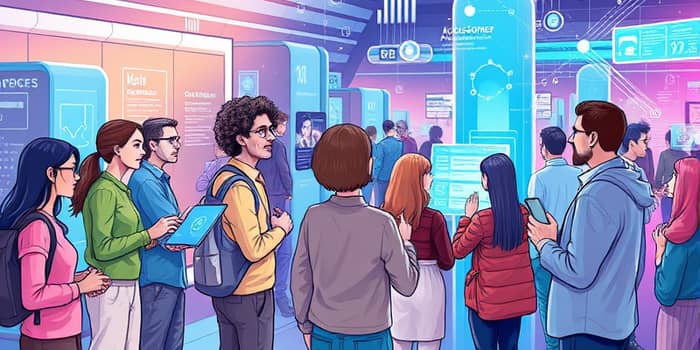
As customer expectations evolve, brands must go beyond generic offerings to forge deep, personal connections. Hyperpersonalization is no longer a buzzword—it’s the next frontier in customer experience.
Traditional personalization relies on simple demographic or purchase history. In contrast, hyperpersonalization harnesses granular individual data—beyond demographic history and context to deliver tailor-made interactions.
By leveraging AI, machine learning, and real-time analytics, companies anticipate needs rather than react to past behavior, ensuring each engagement feels uniquely crafted.
At its core, hyperpersonalization depends on an integrated tech stack supported by rich data.
Customer Data Platforms unify these signals into unified customer view across touchpoints, enabling brands to act swiftly and accurately.
Organizations embracing hyperpersonalization report substantial gains in revenue, loyalty, and competitive edge.
Nearly 90% of marketers see measurable business lift, while 78% of consumers are more likely to repurchase with personalized messages. These outcomes position hyperpersonalization as a strategic imperative.
Across sectors, hyperpersonalization drives superior outcomes.
Companies from telecom to hospitality are already orchestrating dynamic, individualized experiences in real time, raising the bar for customer satisfaction.
To implement hyperpersonalization effectively, brands should adhere to these principles:
1. Deep Data Integration: Break down silos to build comprehensive profiles.
2. Predictive Analytics: Use AI models to forecast next-best actions.
3. Omnichannel Consistency: Ensure messaging and offers remain relevant across web, mobile, and in-store.
4. Dynamic Content Delivery: Adapt UI and communications instantly as customer signals change.
5. Security & Trust: Maintain transparent data governance and secure consent to safeguard customer confidence.
Despite its promise, hyperpersonalization carries risks. Data privacy regulations like GDPR and CCPA demand careful management of consent and transparency.
Brands must avoid crossing into “creepy” territory by over-personalizing or misusing sensitive data. Moreover, significant investment in technology and analytics talent is essential to overcome integration hurdles and resource constraints.
The evolution from broad segmentation to hyper-tailored individual journeys is accelerating. Companies are now poised to move from segmentation to individualization by harnessing journey orchestration tools that respond in milliseconds to customer context.
Proactive experience design will become standard practice, with AI anticipating needs before customers articulate them. As competition intensifies, hyperpersonalization will shift from a competitive differentiator to a baseline expectation.
Hyperpersonalization represents the future of customer experience. By leveraging AI, unified data, and real-time analytics, organizations can create predictive analytics to anticipate customer needs and deliver meaningful, personalized interactions.
Embracing these strategies will not only drive revenue and loyalty but also foster lasting trust. For brands ready to invest in the right technologies and practices, hyperpersonalization offers a clear path to future readiness and sustained competitive advantage.
References