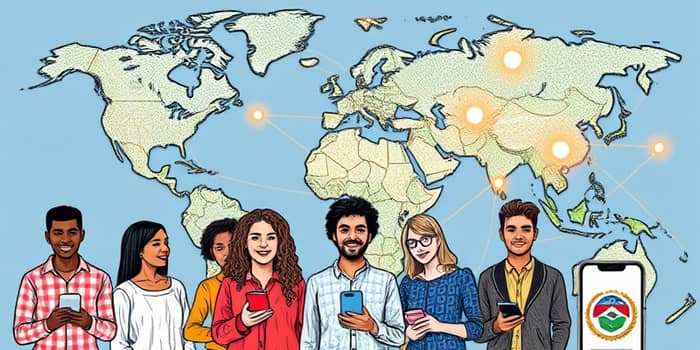
In an era where access to capital can determine the fate of dreams and enterprises, alternative lending platforms are stepping in to fill the void left by traditional banks. By leveraging technology and innovative business models, non-bank institutions are making credit more inclusive, faster, and tailored to the needs of modern borrowers. From peer-to-peer networks to AI-driven credit assessments, these emerging solutions are reshaping financial landscapes around the world.
Alternative lending refers to a spectrum of non-bank financial services that deliver loans and financing outside conventional banking channels. Common models include peer-to-peer (P2P) lending, crowdfunding, marketplace lending, and invoice trading. These platforms harness advanced data analytics, automated underwriting, and online interfaces to bridge gaps for borrowers who may lack collateral or a strong credit history.
By offering quicker and more accessible loans, these services empower individuals, startups, and SMEs to secure funding without the lengthy processes of traditional institutions. The result is a democratization of credit that fuels growth, innovation, and financial inclusion.
The global alternative lending market has experienced explosive growth, driven by investor appetite and borrower demand. Recent estimates place its value between $327 and $431 billion in 2025, with projections soaring to $1.68 trillion by 2035 at a 16% CAGR. Crowdlending and peer-to-peer segments continue to dominate, capturing large market shares and attracting institutional partnerships.
Peer-to-peer lending remains the largest single category, driven by transparent platforms and growing investor confidence. Crowdfunding also captured $241.6 billion in 2021 and continues to expand its share as creators and backers connect globally.
At the heart of this transformation lies cutting-edge tech. From machine learning algorithms that refine credit scoring to digital onboarding processes that eliminate paperwork, technology is the engine powering rapid evolution.
Thanks to state of the art AI algorithms, platforms can analyze thousands of data points in seconds, delivering decisions almost instantly and reducing default risk. Automation also streamlines compliance, fraud detection, and customer support, enabling these lenders to operate at scale while keeping costs competitive.
North America leads the charge, with the U.S. market fueled by a culture of entrepreneurship, robust fintech investment, and regulatory frameworks that encourage innovation. Growth is expected to remain strong through 2030 as digital ecosystems mature.
Europe follows closely, with the UK and Germany at the forefront. Here, strict bank lending criteria and a digital-friendly policy environment have driven SMEs and individuals to explore alternative channels for capital.
The Asia Pacific region boasts the fastest expansion, particularly in China, India, Indonesia, and Vietnam. Low banking penetration, high SME contributions to GDP, and extensive mobile connectivity have created a fertile ground for alternative lenders to thrive.
Traditional banks often rely on legacy systems, rigid criteria, and manual processes, resulting in longer approval times and higher thresholds for borrowers. In contrast, alternative lenders prioritize speed, flexibility, and user experience.
While banks excel in deposit-taking and large-scale corporate loans, fintech platforms specialize in personalized solutions for microbusinesses, freelancers, and startups. This agility allows non-bank lenders to address niche needs and offer customized terms that would be impractical for bigger institutions.
Numerous platforms have emerged as leaders by blending creativity with technology:
Innovators like Stripe and PayPal have also introduced embedded lending solutions, integrating financing options directly into payment workflows to streamline the user experience even further.
Alternative lending has gained traction for several reasons:
However, challenges remain:
Balancing these forces is critical for sustaining growth and ensuring long-term stability in the alternative lending space.
Small and medium enterprises often face a substantial credit gap, with banks reluctant to extend loans without extensive collateral. Alternative lenders are stepping up to bridge this divide, offering tailored financing solutions that adapt to cash flow cycles and growth plans.
This empowers underbanked and underserved populations to invest in equipment, launch new products, and expand operations, ultimately contributing to job creation and economic resilience in communities around the globe.
Regulation remains a double-edged sword. While fintech-friendly policies in the UK and parts of Asia have spurred innovation, inconsistent rules across markets can hinder cross-border expansion and create compliance headaches.
Key risks include platform insolvency, credit defaults, and cybersecurity threats. To mitigate these, many lenders are partnering with established financial institutions, adopting rigorous risk management practices, and engaging third-party compliance services to stay ahead of evolving regulatory demands.
The future of alternative lending will be shaped by deeper integration of blockchain for transparent transaction tracking, open banking for seamless data sharing, and enhanced mobile experiences tailored to borrower needs.
With an unprecedented pace of innovation, platforms will increasingly focus on personalization, green finance solutions, and strategic alliances with incumbent banks to broaden their reach and secure sustainable growth.
As alternative lending matures, it will play a pivotal role in fostering a more inclusive and dynamic global economy, ensuring that access to credit is no longer a privilege but a universal right.
References